Commercial Cleaning
Office Cleaning Checklist for Small Businesses
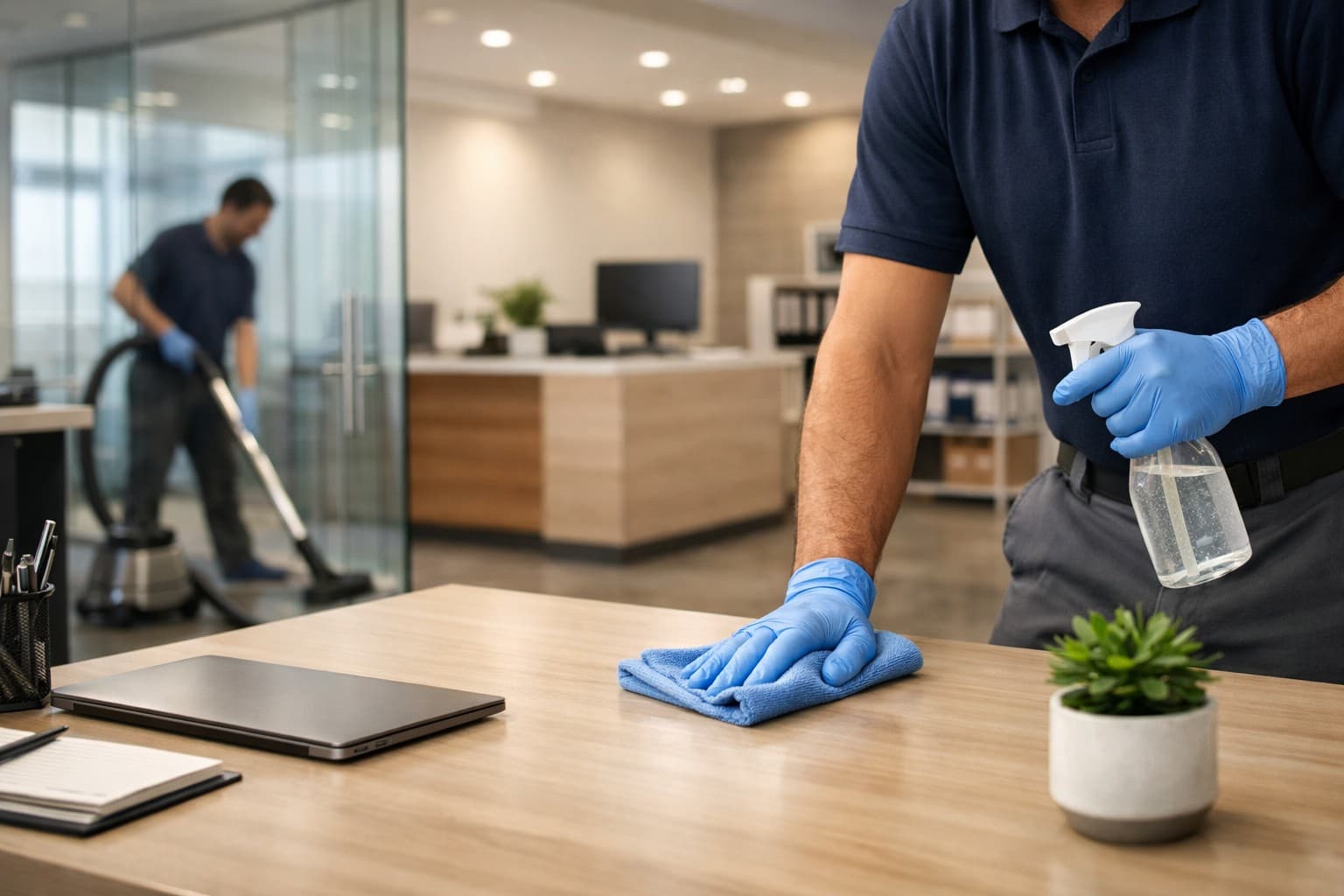
Most small offices clean on some schedule. What often goes unaddressed is a clear, shared definition of what that schedule actually covers: which surfaces get attention, how often, and who is responsible. A written checklist turns an informal routine into a repeatable standard that anyone performing the work can follow consistently.
Cleaning, Sanitizing, and Disinfecting
These terms describe different processes. Understanding the distinction helps you apply the right approach rather than defaulting to the most aggressive option for every task.
Cleaning
Removes visible dirt, dust, and debris from surfaces. It is the necessary first step because disinfecting products work less effectively on soiled surfaces.
Sanitizing
Reduces the number of germs on a surface to a level considered acceptable under standard health guidelines. Appropriate for food-contact surfaces and regularly touched areas in ordinary office settings.
Disinfecting
Kills a higher proportion of pathogens on a surface. More relevant when someone has obviously been ill, or when the use of the space or applicable requirements call for it.
For most small offices, routine cleaning combined with periodic sanitizing of high-touch surfaces covers the standard. When using any cleaning or disinfecting product, follow the label directions and, where applicable, consult the Safety Data Sheet for safe handling and ventilation requirements.
The Checklist
Organized by frequency. Traffic levels, occupancy patterns, and how the space is used will affect what works for your office specifically.
Daily
- Empty trash and recycling containers
- Wipe down high-touch surfaces: door handles, light switches, and shared equipment controls
- Clean and sanitize restrooms, including toilets, sinks, faucets, and counters
- Wipe down breakroom and kitchen surfaces: counters, sinks, and appliance exteriors
- Sweep or vacuum high-traffic floor areas
- Address spills and visible debris as they occur
Weekly
- Mop hard floors throughout the space
- Vacuum carpeted areas fully, including under desks and chairs where accessible
- Wipe down desk surfaces and shared equipment; follow manufacturer guidance for electronics
- Clean interior glass, windows, and partition surfaces
- Wipe down cabinet fronts, door frames, and baseboards
- Clean appliance interiors in the breakroom, such as microwave and refrigerator shelves
- Restock soap, paper towels, and other consumables
Monthly and As-Needed
- Deep-clean restrooms: grout lines, fixtures, and exhaust vents
- Vacuum air vents and returns to reduce dust accumulation
- Wipe down light fixtures and ceiling fan blades
- Clean blinds, window treatments, and interior window frames
- Address floor maintenance beyond routine mopping, such as scrubbing, buffing, or refinishing depending on surface type
- Inspect for areas that may need additional attention, such as staining, grout restoration, or post-renovation residue
When a Checklist Is Not Enough
A routine cleaning schedule handles steady-state maintenance. Some situations require more than a checklist covers.
Post-construction or renovation residue
Fine dust, adhesive, and debris from construction or renovation work requires methods beyond a standard routine. This is typically handled separately from day-to-day cleaning and should be addressed before returning the space to regular use.
Major occupancy transitions
Before moving into a space or returning it at the end of a lease, a thorough baseline clean often exceeds what a regular maintenance schedule covers. Planning these events separately keeps the regular checklist clear from absorbing work it was not designed for.
Periodic intensive cleaning
Some offices schedule a one-time commercial deep clean on a quarterly or semi-annual basis to address areas that standard routines do not reach in detail, such as grout lines, upholstery, and floor surfaces that need mechanical treatment.
After visible illness
When someone has obviously been ill, disinfecting the surfaces and areas they used is appropriate. Use a product listed for the relevant pathogens, follow the label directions, and consult any applicable guidance for your setting.
If your current cleaning approach has outgrown what an in-house routine can manage, a commercial cleaning service built around office environments can help determine the right cleaning checklist and frequency for your space. For recurring service on a defined schedule, our janitorial care program covers ongoing office maintenance at a consistent standard.
About the Author
T's Pristine Clean LLC
This guide was prepared by T's Pristine Clean LLC, which produces practical guides for office managers, property managers, and small business owners across Greater St. Louis and eastern Missouri. T's Pristine Clean LLC offers commercial cleaning, recurring janitorial cleaning, and post-construction cleaning, with commercial and residential window cleaning available, and is insured. Learn more about us.
Request a quote
Tell us what needs to be cleaned.
Share the property or project location, the service you need, and your timing. We will respond within one business day to confirm the next step.